Pavement That Meets Federal Aviation Standards
Airport construction in Douglas for aviation facilities where precision grading, compaction tolerances, and material specifications determine operational safety
Aviation pavement construction in Wyoming requires meeting FAA specifications for flatness, density, and structural capacity that exceed standard commercial paving tolerances by significant margins. Ramshorn Construction completes airport runway rehabilitation, taxiway installation, and apron construction where deviations of even half an inch over ten feet can affect aircraft operations and where compaction must reach 98% of maximum density throughout the base and surface layers. The difference between aviation-grade pavement and commercial asphalt appears in the testing documentation, material certifications, and quality control processes that verify every lift meets federal specifications before the next phase begins.
Airport projects involve coordinating with engineers, aviation authorities, and operational schedules that require phased construction to maintain aircraft access throughout the work period. Ramshorn Construction uses GPS-guided grading equipment to achieve the precise elevations and cross-slopes specified in engineering plans, then documents density testing results for each compacted layer to verify compliance with design specifications.
Arrange an initial consultation to review project plans, federal compliance requirements, and construction phasing for your aviation facility improvements.
How Airport Pavement Addresses Aircraft Loading
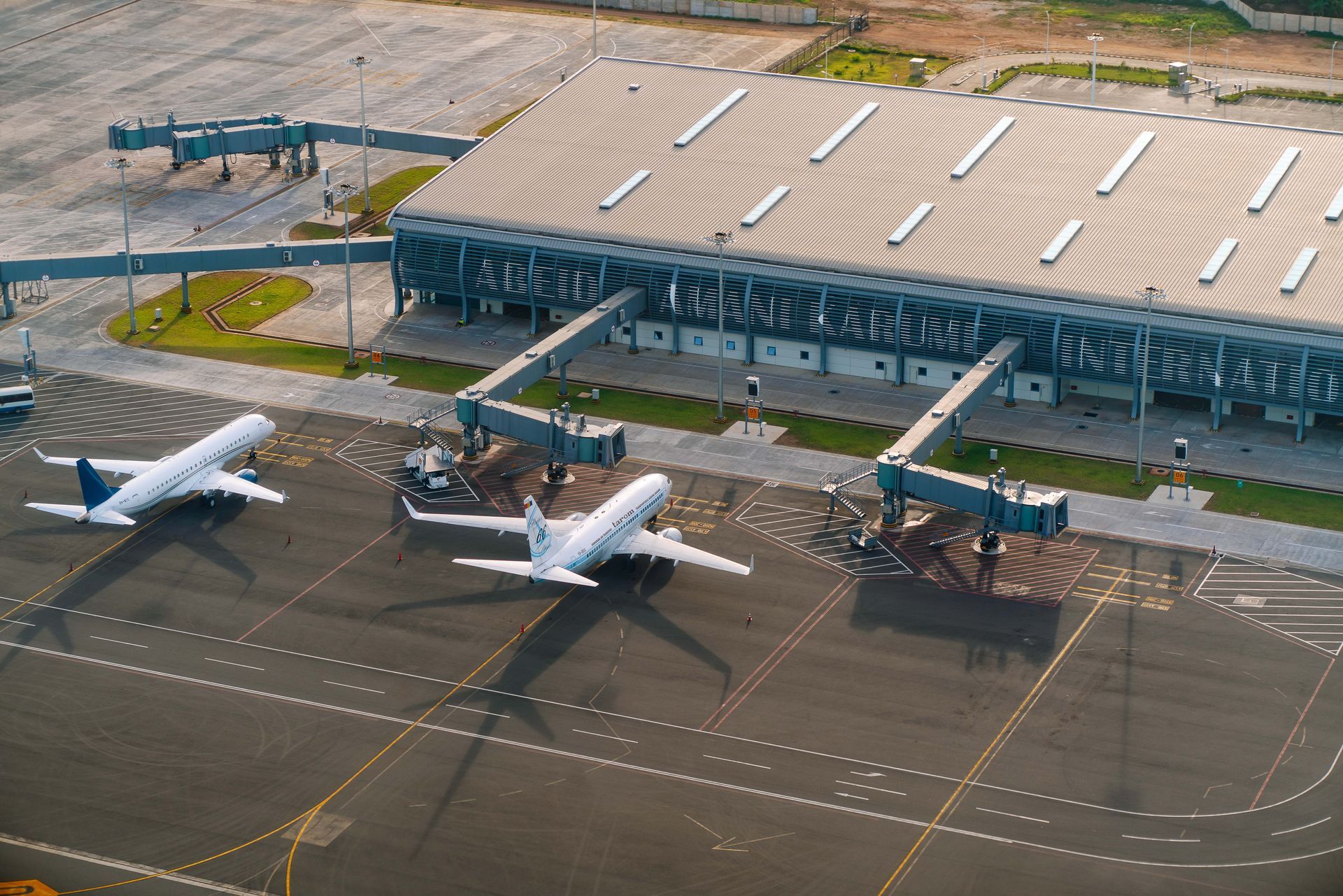
Runway construction involves thicker asphalt sections and stronger base materials than commercial pavement because aircraft impose concentrated loads through small tire contact patches, creating stress levels that would quickly fail standard parking lot construction. The structural design accounts for the specific aircraft types using the facility, calculating pavement thickness requirements based on gross weights, landing gear configurations, and anticipated traffic cycles over the pavement's design life.
When construction completes to specification, pilots notice consistent surface conditions without bumps or depressions that affect takeoff and landing operations, and facility managers see pavement that maintains structural integrity through years of aircraft operations without developing the cracking and rutting that signal premature failure. FAA-compliant construction includes material testing at certified laboratories, density verification using nuclear gauges, and elevation surveys that confirm the finished surface matches design grades within required tolerances.
Taxiway installations connect runways to aircraft parking areas with pavement designed for slower speeds and tighter turning movements, while apron construction provides the parking and maneuvering surfaces where aircraft operate at low speeds. Each pavement type requires different structural sections based on how aircraft loads are applied during different phases of ground operations.
Answers to Aviation Infrastructure Questions
Airport construction projects require specialized expertise in federal specifications, testing protocols, and quality control procedures that differ substantially from commercial paving work.
What makes airport pavement construction different from road paving?
Aviation pavement must meet FAA specifications for material quality, compaction density, surface smoothness, and structural capacity that require specialized testing equipment, certified laboratory analysis, and documentation procedures not typically required for commercial projects.
How does Ramshorn Construction verify compliance with federal aviation standards?
Every phase includes material certifications from suppliers, density testing using calibrated nuclear gauges, elevation surveys with GPS equipment, and laboratory testing of asphalt samples to confirm mix design properties match specifications before installation begins.
Can airport construction continue while the facility remains operational?
Phased construction allows portions of runways or taxiways to remain in service while work progresses on closed sections, though coordination with air traffic control and implementation of temporary operational procedures becomes essential to maintain safety throughout the project.
Why do airport projects in Douglas require specific equipment capabilities?
Achieving the flatness tolerances and compaction densities specified in aviation projects requires GPS-guided grading systems, heavy compaction rollers, and paving equipment capable of placing material in precise lifts while maintaining consistent temperatures throughout the mat.
What testing documentation does completed aviation pavement require?
Final project closeout includes as-built drawings showing actual elevations and cross-slopes, density test results for each compacted layer, material certifications for all asphalt and aggregate components, and laboratory test results verifying mix design compliance.
Ramshorn Construction brings more than three decades of heavy civil construction experience to aviation infrastructure projects across Wyoming, working with airport authorities and engineering firms on runway rehabilitation, taxiway construction, and apron installations that require both specialized technical capabilities and proven project management expertise. Request a project consultation to discuss engineering plans, federal compliance requirements, and construction scheduling for your aviation facility improvements.